There are people you meet and immediately feel like you've known forever.
You probably know it. A friendship that goes deep in weeks, a stranger who says the exact thing you needed to hear, a connection that ends abruptly and leaves you changed in ways you couldn't have predicted.
Soul contracts are one framework for understanding why.
The basic idea: before we incarnate, we make agreements with other souls about the roles we'll play in each other's lives. The mother who teaches you what unconditional love looks like. The friend who holds the mirror. The difficult person who triggers the exact wound that most needs healing. The partner who arrives right when you're ready.
I find this framework brings a lot of peace and clarity to my life, and like most spiritual concepts, I hold it loosely, as a useful lens rather than a literal claim. But I've found it genuinely helpful for making sense of relationships that feel charged with meaning beyond what the surface story explains.
The difference between soul contracts and fate
One thing worth clarifying: soul contracts don't mean your life is scripted. The framework as I understand it doesn't remove choice, it suggests that certain meetings and certain themes were set up in advance, but how you move through them is still entirely up to you.
Think of it less like a fixed story and more like a stage set with certain elements already in place. The people, the timing, the circumstances...those might be arranged. What you do with them is yours.
This is actually one of the things I find most useful about the concept. It reframes difficult relationships. Instead of "why is this person in my life making things hard," the question becomes "what did I sign up to learn from this, and am I learning it?" That shift alone can change how you move through a relationship that's been confusing or painful.
"The soul contract framework doesn't give you answers so much as it gives you better questions."

Karmic relationships
A specific category worth naming: karmic relationships, which are soul contracts with a particular kind of charge. These are connections where something unresolved is being worked through — old patterns, old wounds, old dynamics that keep repeating until they're consciously addressed.
Karmic relationships tend to feel simultaneously magnetic and difficult. There's an intensity that's hard to explain rationally. The highs are high, the friction is real, and when it ends — if it ends — there's often a sense of something completing rather than something simply breaking.
The cord-burning practice comes from this framework. When a karmic relationship has run its course, the energetic cords that connected you don't automatically dissolve. The deliberate act of releasing — in meditation, in ritual, in whatever form feels true for you — is how you close the contract consciously rather than leaving loose ends trailing.
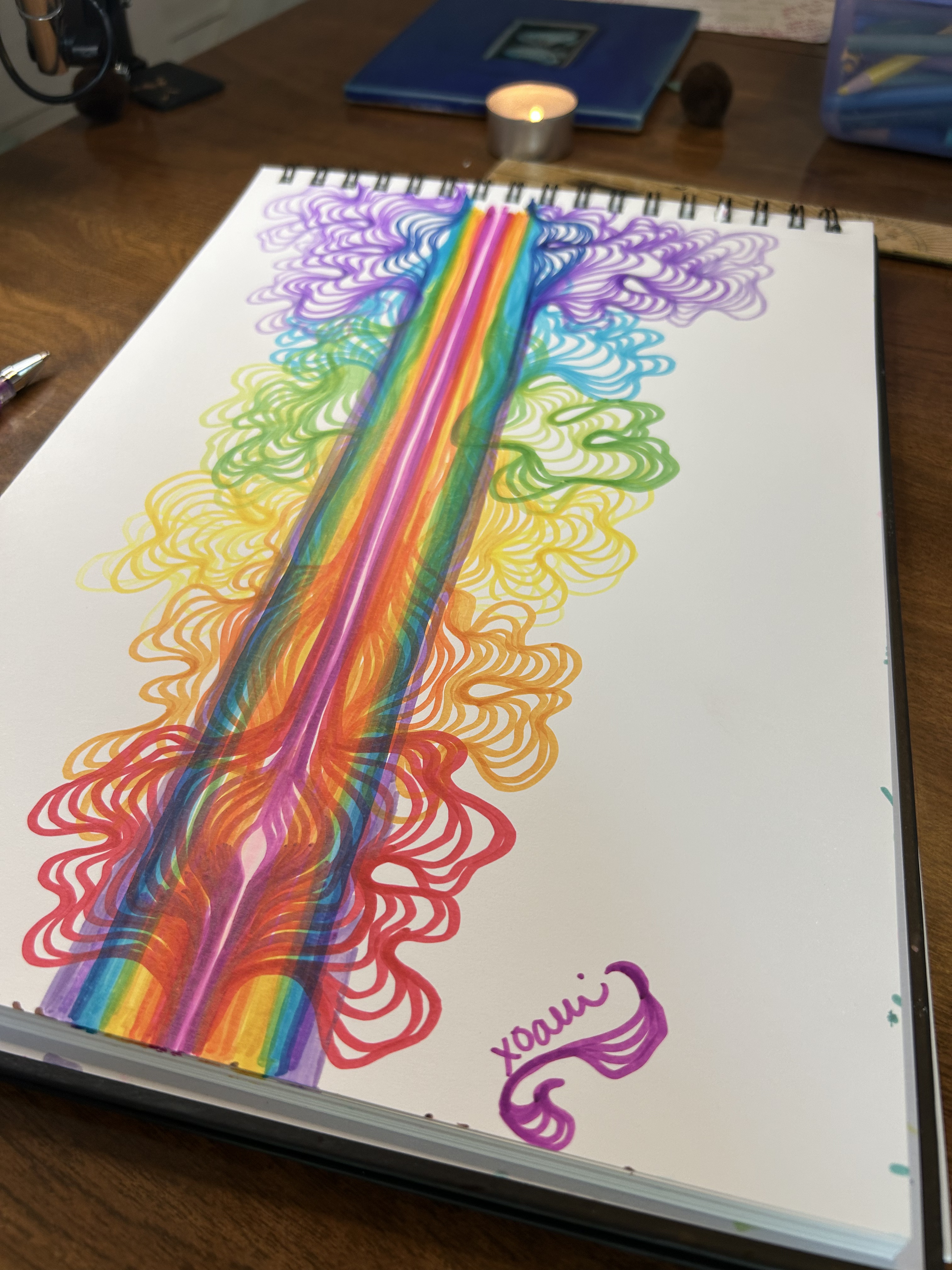
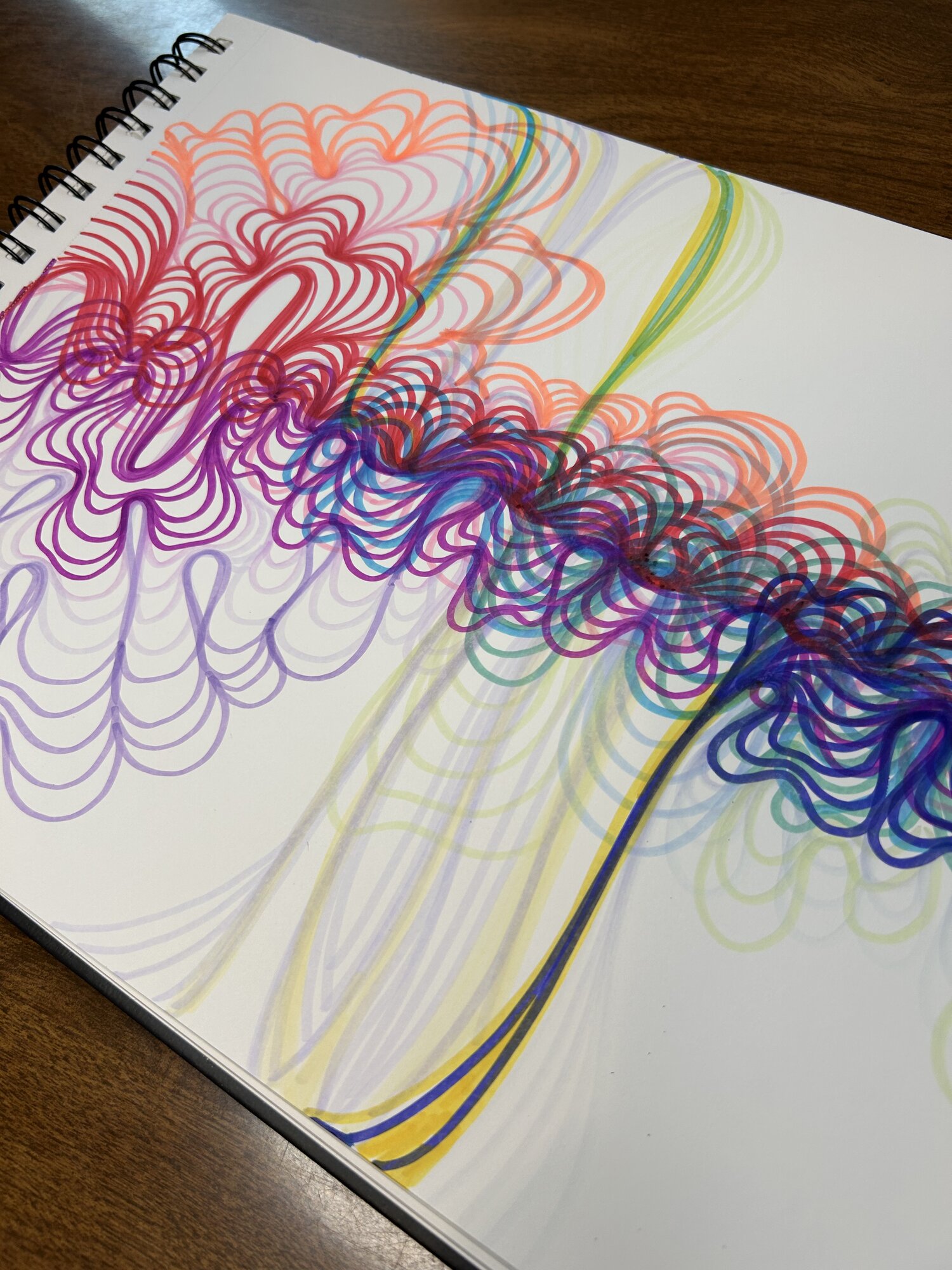
I made a piece about this. The karmic cord piece is one of the more emotionally direct things I've drawn — it's about the moment of release, what it looks like when a connection that has served its purpose is finally allowed to complete.
When two souls' paths merge
The counterpart to karmic contracts is the soul connection that arrives with a different quality entirely — not intense and frictional but expansive and clarifying. The person whose presence makes you more yourself rather than less. The relationship that doesn't need to be worked through so much as built on.
These contracts have a different energy. They feel less like a lesson and more like a home.
I made a piece about this too, two paths that were always moving toward each other, converging at the point where both people were finally ready.
Working with this in your own life
If you're sitting with a relationship that feels unusually charged, whether difficult or unusually meaningful, one entry point is to ask: what is this teaching me that nothing else has? What keeps coming up in this dynamic that also appears in other areas of my life?
The soul contract framework doesn't give you answers so much as it gives you better questions. And sometimes better questions are the whole thing.