I want to be honest upfront: I came to tarot skeptically.
Not hostile, hahah. I was already deep enough into meditation and manifestation and spirit guides that skepticism about tarot specifically would have been a strange place to draw a line. But uncertain.
I didn't know what tarot was actually for, beyond the cliché of fortune-telling, and I wasn't sure I wanted to commit to learning a new system when I was already working with a lot.
What changed was finding the right deck.
Why the Wildwood
Most people start with the Rider-Waite-Smith...the classic deck, the one most tarot books are written around, the one with the most tutorial content available.
It's a solid choice for learning.
It's not the one that called to me.
The Wildwood Tarot is built around the imagery of the ancient Celtic forest and the wheel of the year.
The traditional archetypes are still there, but they're expressed through figures like the Wanderer (the Fool), the Shaman (the Hierophant), the Archer (the Emperor).
The suit of Wands becomes Bows. Cups become Vessels.
The imagery is deeply nature-based, seasonal, rooted in the old world in a way that resonated with something I was already working with.
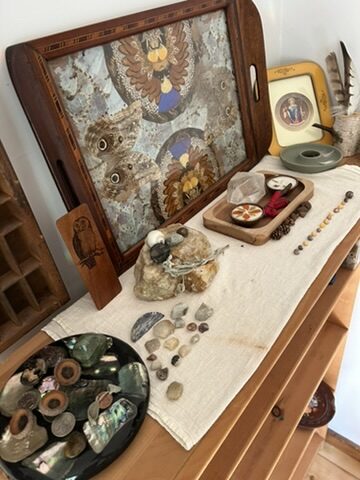
I work with Merlin as one of my spirit guides. I have a deep relationship with found natural objects (the butterfly collection, the feathers, the stones)
The Wildwood felt like it was from the same world as those things. So I started there, and I've stayed.
How I actually use the cards
Not to predict the future. I want to be clear about that because it's the assumption most people bring to tarot, and it's not how I use it.
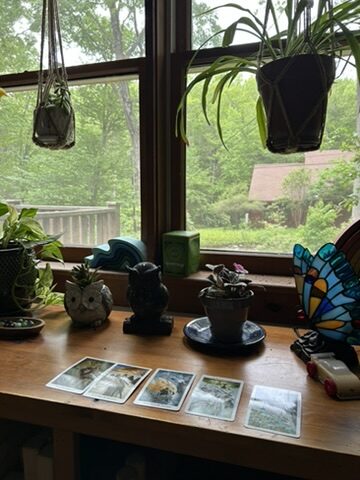
I use tarot as a mirror. As a set of prompts for examining what's happening internally. As a way to have a structured conversation with my own intuition.
When I pull a card, the question isn't "what will happen?" It's closer to: "what do I need to see right now?" or "what's the energy I'm moving through?" or "what is the situation calling for?"
The card doesn't answer those questions so much as it gives me an image and an archetype to think through. A lens rather than a prediction.
The Wildwood is particularly good for this because the imagery is rich enough to hold multiple meanings.
A card can mean something different on Tuesday than it did the week before, depending on what you're sitting with. I use them as a sort of language and means of reflection and conversation with my guides.
"The discomfort cards are worth noting: the ones you don't want to see are usually the ones most worth sitting with."
Eighteen months of self-teaching
I didn't take a class or work with a teacher. I read the book that came with the deck. I kept a tarot journal for the first several months, writing down the cards I pulled and what they brought up for me.
I looked things up when I was stuck. I paid attention to which cards appeared in clusters, which ones I kept pulling, which ones made me uncomfortable.
The discomfort cards are worth noting: the ones you don't want to see are usually the ones most worth sitting with.
For me, early on, it was the cards that pointed toward necessary endings or difficult truths. Over time those cards became the ones I found most useful.
What tarot and the art have in common
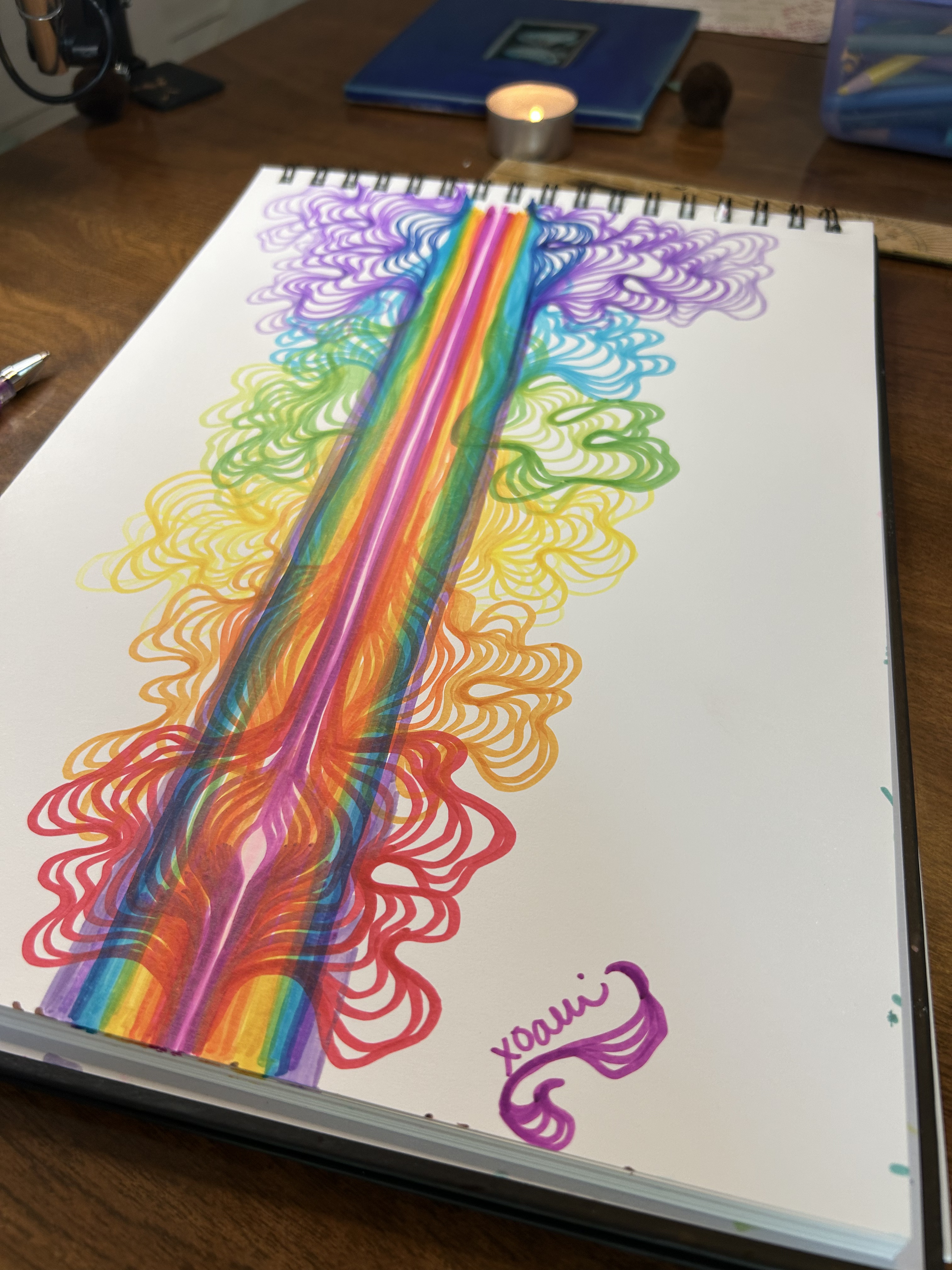
Both are practices of making the internal visible. The tarot card externalizes an archetype; the drawing externalizes what I see in meditation.
Both are ways of having a conversation with something that doesn't communicate in words: intuition, the unconscious, the larger pattern of what's happening in a life.
I often pull a card before I start drawing, not to predict what I'll make, but to orient. To ask what's alive right now and worth bringing forward.
Sometimes the card shows up directly in the work, like a figure, a symbol, an energy. More often it just sets a tone that I can't quite articulate but can feel in the piece.
The Wildwood is one of the better decisions I've made in the last two years. If you're curious about tarot and haven't found a deck that feels right yet, it's worth looking at.